

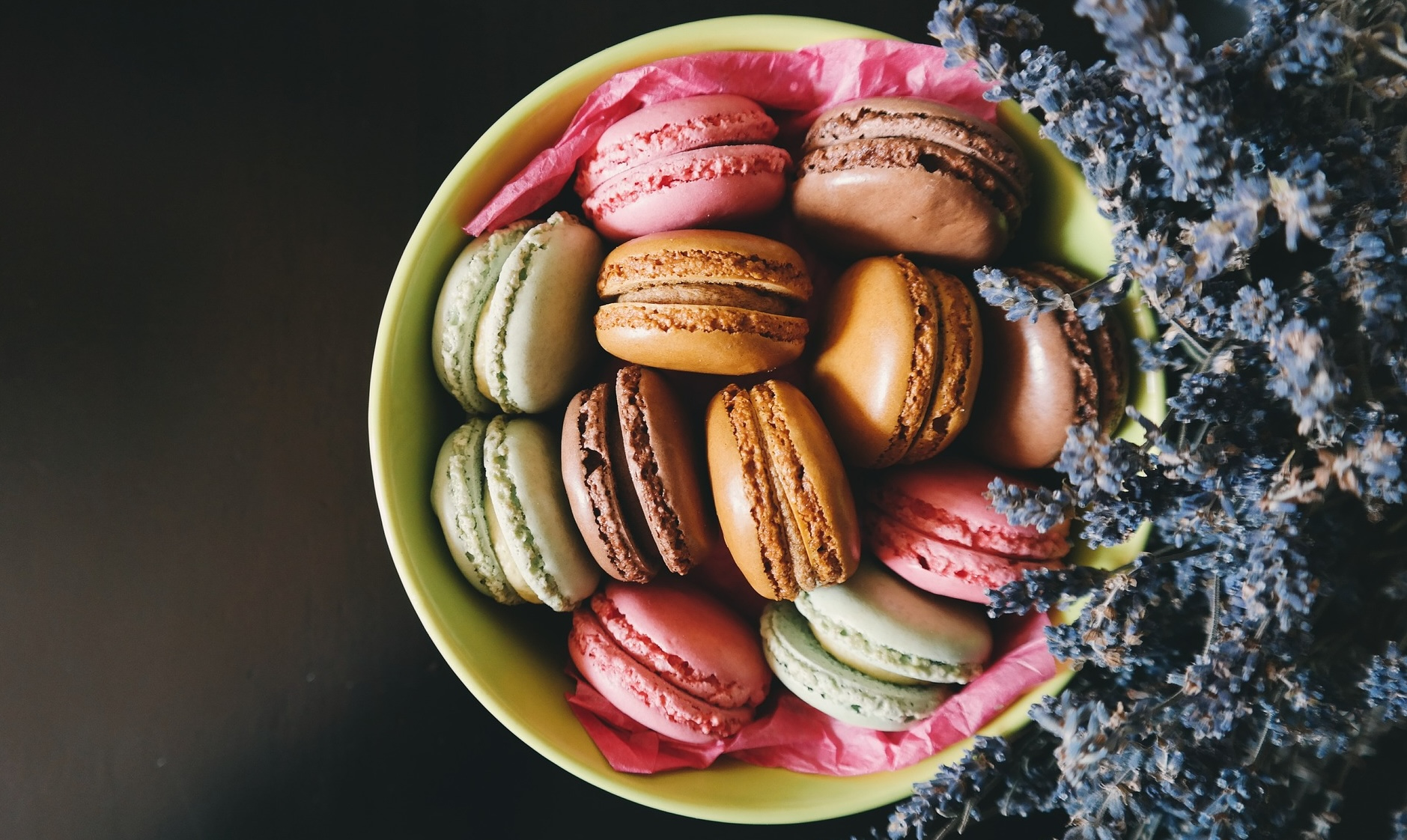
The Macaron : From Simple Biscuit to Iconic French Pastry
by Chloe Destremau
Renowned for its delicate balance of textures and flavors, this exquisite meringue-based confection stands as a true emblem of French pastry: the macaron. It has delighted our taste buds for centuries, though it did not start as the intricate pastry we know today. It used to be a simple biscuit, made of simple ingredients: almond powder, sugar, and egg white. No ganache, no creamy textures, no soft shells, just a regular biscuit. Its origin is blurry, and its evolution into the pastry we know today is just as unclear, but we’ll try to make the most sense of it.
Unlike art and architecture, historical records on food are scarce, and meals were rarely documented. It is believed, however, that the macaron first appeared in the Middle East, as did many other almond-based pastries and cakes, in the region where the almond tree originated. Soon, foods and ingredients, including the almond tree and its versatile powder, spread to Europe through trade and the work of religious missionaries.
French author François Rabelais mentions a round, almond-based pastry in his book Le Quart Livre (1552). Though he does not outright mention the macaron itself, this is the first written evidence of the pastry in France. Some attribute the arrival of the maccherone in France to Catherine de Medicis when she married King Henri II in 1533. However, historians—experts in Italian influences during the Renaissance—have debated this fact. It’s possible the macaron did arrive with Catherine’s court—or the people following her court—possibly making the modern macaron its direct descendant. But it’s entirely possible the macaron developed independently multiple times. Almond trees were widely cultivated in the Mediterranean, making the trade of almonds readily accessible throughout the region.
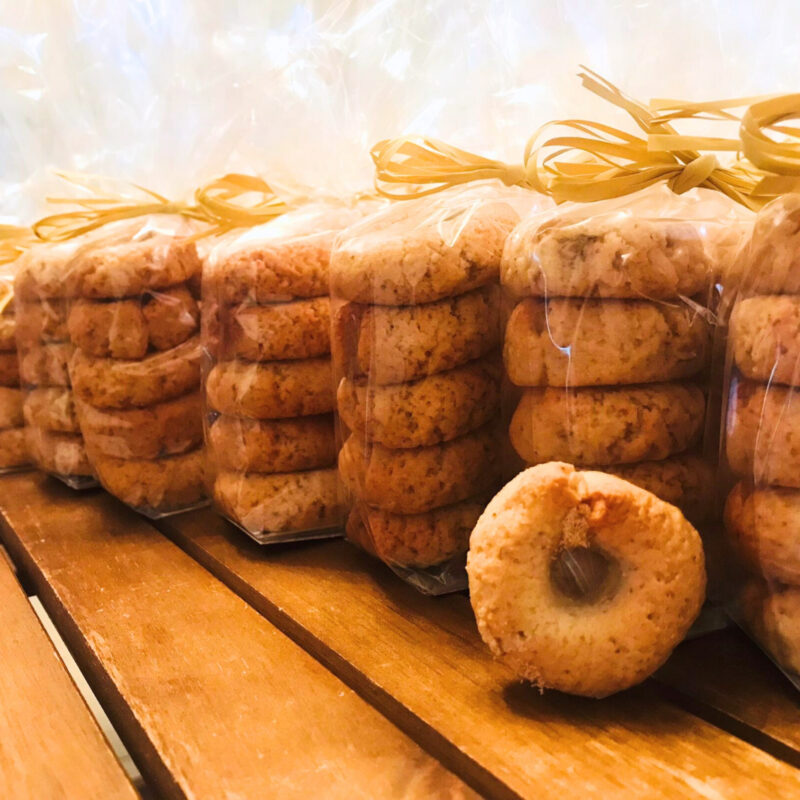 Photo above: The macaron of Cormery
There are records of making macarons in the abbey of Cormery, located just south of Tours in the Loire Valley, as early as 781. Did the Italian maccherone appear much earlier than believed, or did the macaron of Cormery simply evolve all on its own? It’s hard to say. It is written, however, that for the wedding of the Duke Anne de Joyeuse in 1581, a plate of Italian macarons was gifted, possibly by Catherine de Medicis. The Duke, delighted by these biscuits, subsequently demanded their recreation in Joyeuse, located in southern France, where almond trees were grown. It has since evolved into a regional delicacy known today as the Macaron de Joyeuse. The Cormery and Joyeuse macarons are not identical: Cormery’s is ring-shaped, while Joyeuse’s is round and contains a touch of hazelnut. So there, if Catherine’s bakers and cooks didn’t bring along macaron recipes when she married Henri II, she may have popularized one variety, at the very least.
But the macaron did not stop evolving there. In 1660, another important moment in macaron history occurred when another plate of macarons was served for yet another wedding, this time for the marriage of Louis XIV and Maria Theresa of Spain. The biscuits were made with almond powder from either Valencia or Marcona — a nod to the queen’s origins — by the pâtissier Adam. The biscuits were an immediate hit, and soon Maison Adam began creating the macaron de Saint-Jean-de-Luz, a regional confection of the Pays Basque. Meanwhile, in Versailles, the purveyors of Louis XIV’s court, named Dalloyau, served macarons to kings from 1682 until Louis XVI and Marie-Antoinette.
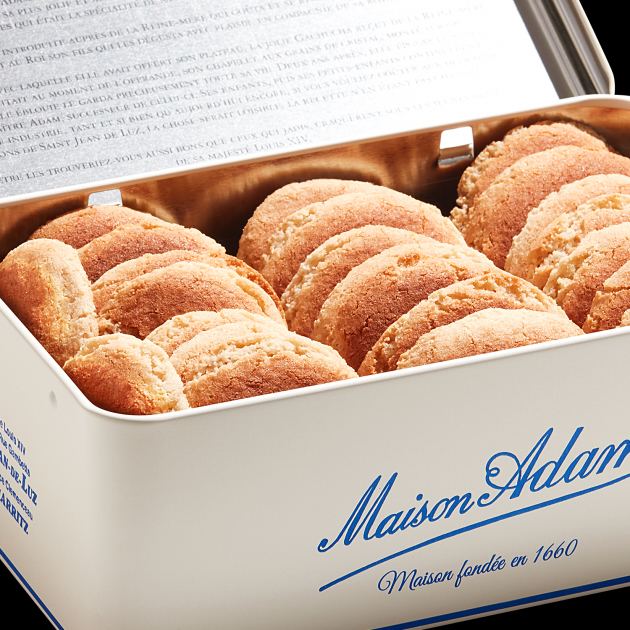 Photo above: Saint-Jean-de-Luz Macaron from Maison Adam
The macaron sprouted in all corners of France, and while it still remained a relatively simple-looking biscuit, it quickly became a fashionable treat, and recipes for it began to appear in cookbooks, like Le Patissier François (1651). In this cookbook, each step of the macaron’s preparation is thoroughly described—from making the almond powder in a mortar, to obtaining a well-bound paste while retaining a soft texture with rose water, and even describing the placement of each mound on parchment before putting it into the oven. Macarons back then could also be incorporated into other culinary creations—often crumbled into a melon, pistachio, or egg yolk tart, or even into a “candied lemon peel omelet” as recommended by chef Pierre de Lune in 1656.
As sugar became increasingly abundant across Europe, French cuisine began shifting away from medieval traditions toward more modern tastes. Sweet and savory dishes were separated both in preparation and in serving, leading to a sugar frenzy. Recipes expanded, new flavors were created, and more ingredients were added. The Macaron of Amiens—cylindrical shape, closer to the Breton shortbread—is made with honey, sometimes enriched with apricot, orange marmalade, or other fruits. Soon, macarons were no longer served only at lavish royal banquets but were also offered in bakeries and by innkeepers.
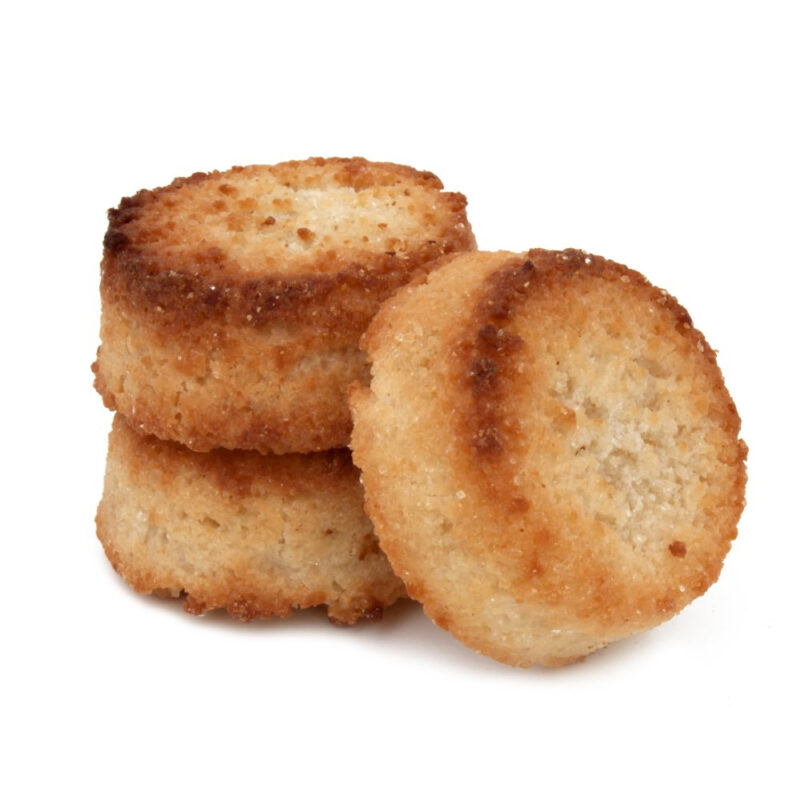 Photo above: Macaron of Amiens
Macarons notably became popular in abbeys and convents, where meat was forbidden. In Saint-Émilion, in southwestern France, a convent of the Order of Saint Ursula—which provided free education to women from lower social classes—also made its own macarons! The recipe was closely guarded and passed down through generations until it was nearly lost during the French Revolution, when the convent was destroyed. One of the Ursuline sisters, Madame Boutin, is believed to have sold the macaron recipe in exchange for food and shelter, thereby ensuring its continuation through history.
Macarons were thus also made for profit. In the town of Montmorillon in central France, two sisters began selling their own macarons, distinguished by their crown shape. Their business was later taken over by their descendants, and their recipe has since become a regional variety. Farther east, in Nancy, it is believed that two religious sisters of the Dames du Sacrement—known as the “Macaron Sisters”—also took up macaron making as a business in the 18th century, though archival evidence of this macaron’s history is sparse. It has been conjectured that no religious sisters ever existed and that the tale may have been created as a marketing strategy. It proved effective, however, as the Macaron of Nancy remains one of the most famous French varieties.
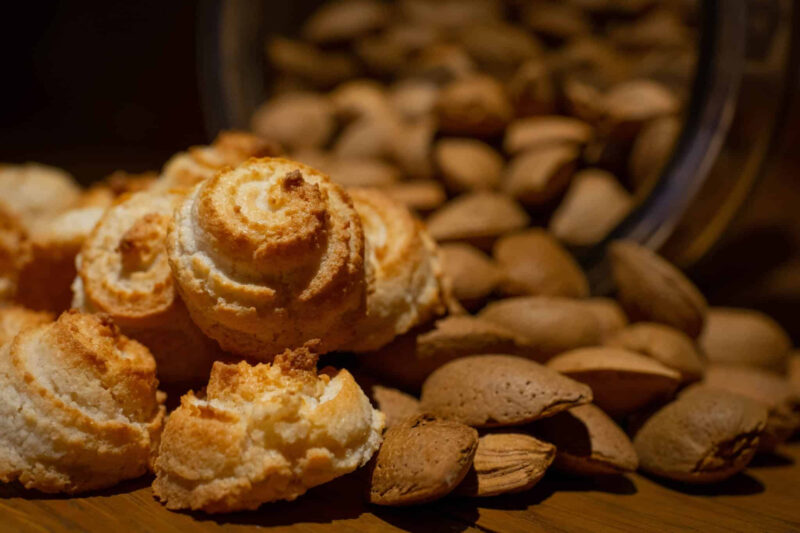 Photo above: Macaron of Montmorillon
It was in the 20th century that the macaron was thoroughly revolutionized. An idea—perhaps born in the mind of a baker in Switzerland—brought two macarons together with a buttercream filling to enhance their flavor. This innovative macaron was introduced in Paris, where other bakers quickly followed the trend, including Pierre Hermé and Claude Gerbet, who refined the recipe. By incorporating almond powder into Italian meringue and whipping egg whites with hot sugar syrup, they achieved the smooth, delicate shells that define the macaron today.
Maison Ladurée, with baker Pierre Desfontaines, became known for its popular pastel macarons in a wide variety of flavors and fillings, including jam, jelly, fruit cream, or ganache. This “Parisian macaron” elevated a humble biscuit into a vibrant, elegant symbol of French gastronomy.
It may be that Catherine de Medicis’ Italian influences popularized the biscuit made from almond powder, sugar, and egg white, but the definitive origin of the macaron is still up for debate. Perhaps it originated in a struggling abbey in the Loire Valley, or maybe macarons emerged independently as almond powder and sugar spread across medieval France. Who knows? What we do know is that this biscuit has been around for a very long time, and it has evolved into many delicious varieties, flavors, and textures that truly represent France’s pastry traditions and gastronomic ingenuity.
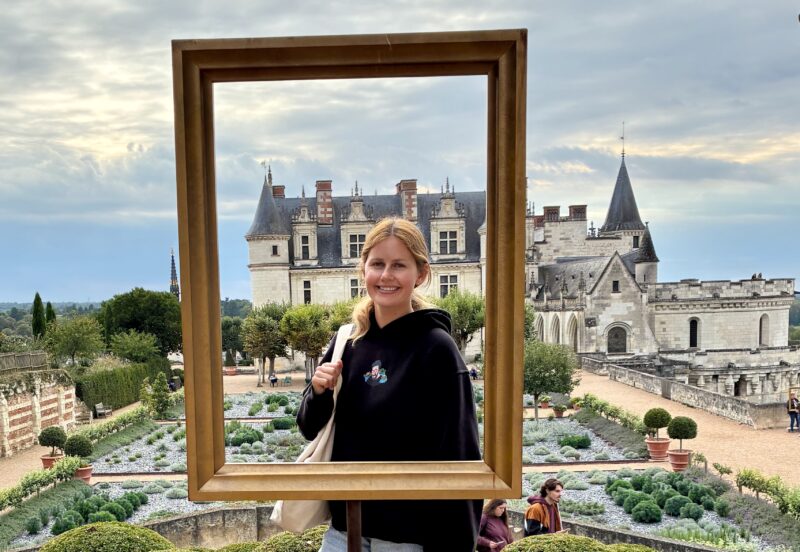 About the writer (photo): Chloé Destremau, pictured here at the Royal Castle of Amboise during one of our autumn Loire Valley Tours is a freelance writer and the daughter of Christy Destremau, founder and owner of France Off the Beaten Path Tours.
Ready for your journey to discover the enchanting world of France?
- Check out 2026 tour dates
- Plan ahead, check out our 2027 tour dates
- Contact us at christy@traveloffthebeatenpath.com to request space availability and/or ask questions.
- Message us on WhatsApp at +1.717.683.2827