

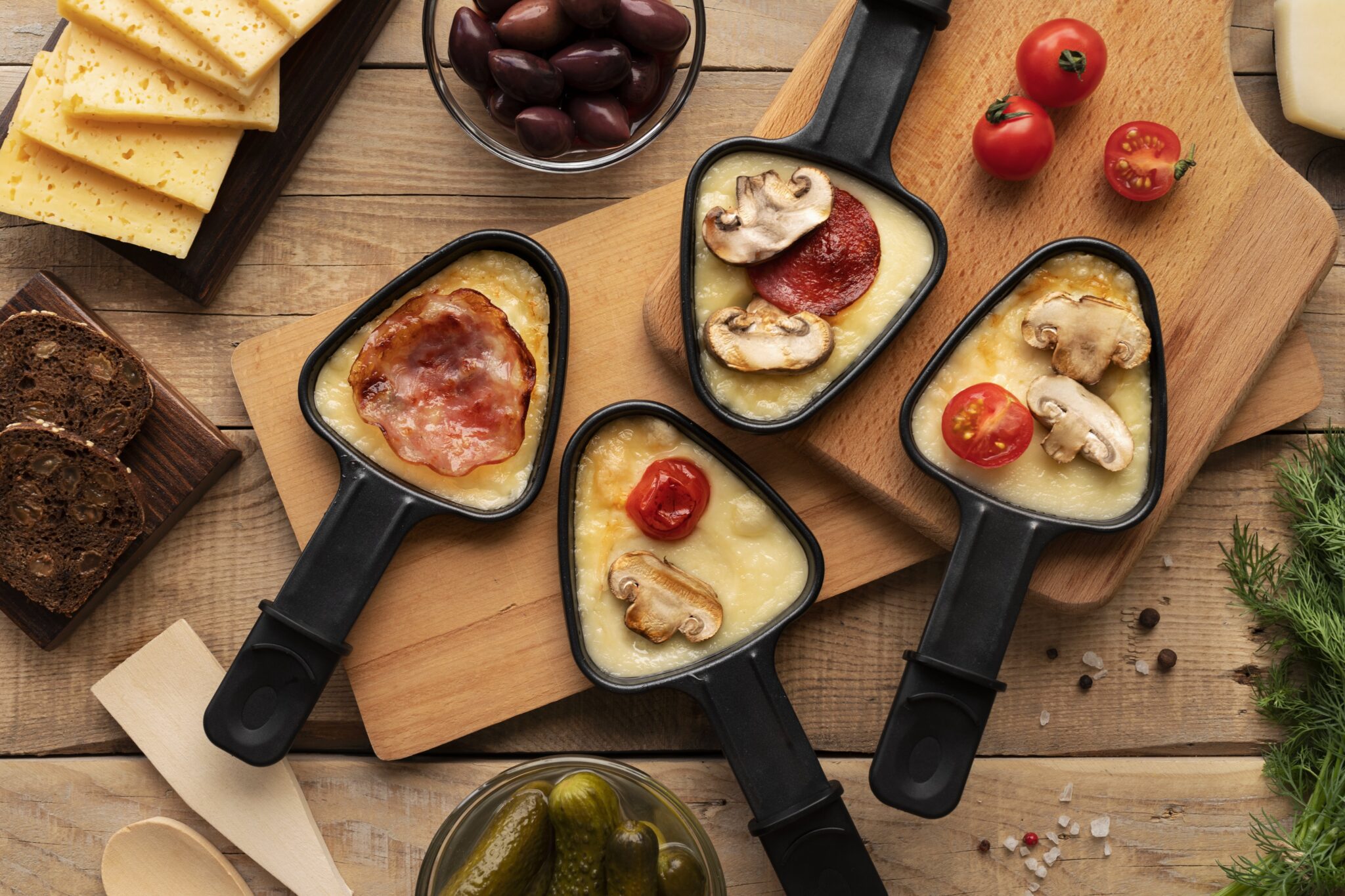
Raclette: From Alpine Origins to French Favorite
by Chloe Destremau
With autumn upon us and the end-of-year holidays quickly approaching, golden and brown leaves fluttering to the ground, and the cold, as well as snow for some, shepherding us into our homes, we are ready to warm ourselves with a staple meal, the raclette.
Origins of the raclette
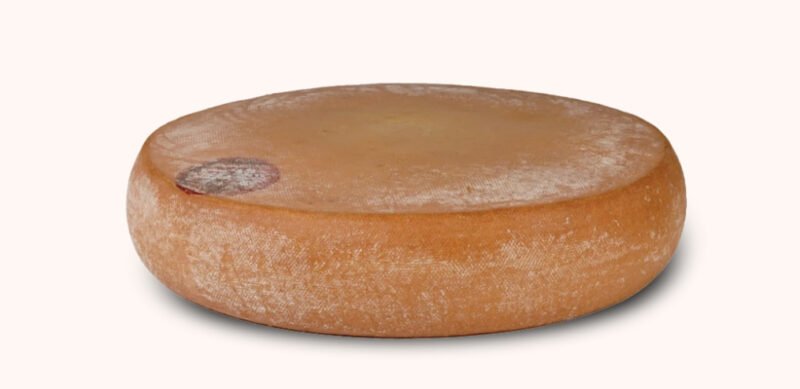
While raclette is tightly woven into French culture, its story begins across the border, in the Swiss canton of Valais. Legend says that one cold evening, as the wind blew across the rocky ranges and cattle mooed at the snow, Alpine shepherds decided to melt their cheese over a fire, seeking the warmth of the flames. But the act of melting cheese rather than eating it cold is first mentioned in the notes of a Swiss doctor in the late sixteenth century, who praised the exceptional flavors of the cheeses, hummed with sweetness and tenderness.
Traditionally, it is a semi-hard cheese made from raw milk, savored by melting it over a fire and then scraping it with a knife over hot potatoes. In French, the verb « to scrape » is « râcler », hence the term « raclette », which first appeared in 1874 and only designated the cheese, not the meal as a whole. The dish only acquired the name a couple of decades later, in 1909. But raclette was still very localized in the Valais and received only minimal external recognition, mainly from other cheese connoisseurs, when it was presented at the Cantonal Exposition of Sion.
One day, when a French cheesemaker and businessman discovered the dish while in the Swiss Alps, he decided to return home across the valley and make his own raclette. He first tested the dish at ski stations, which were flourishing across the mountains following the economically prosperous post-war reconstruction of France. It was an immense success — so much so that five years later, in 1978, the very first electric raclette grill appeared on the market. And soon, as quick as the wind, everyone in France had a raclette grill in their home. The dish was sewn into French traditions, and today, few realize where the threads originated.
The French raclette
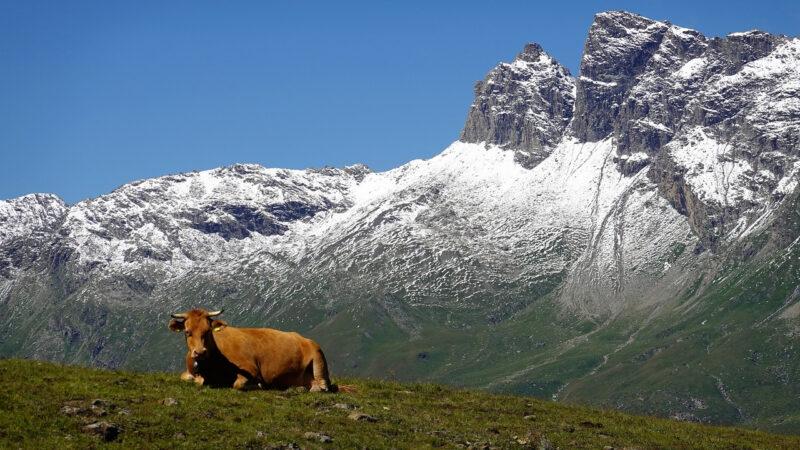
 In France, as mentioned before, the tradition first took root in the French Alps, specifically in the departments of Savoie and Haute-Savoie, and in certain communes of Ain and Isère, all on the frontier with Switzerland. The cheese, Raclette de Savoie, obtained PGI (Protected Geographical Indication) accreditation in 2017, a quality label that designates products whose quality or reputation is linked to the place of production. One of the requirements for this designation stipulates that the cows must graze in the region’s pastures for at least 150 days each year, typically during the warmer summer months. When the temperature drops, the cows are sheltered in barns and fed hay harvested from the same PGI area.
Raclette de Savoie is made exclusively from the milk of three breeds — Montbéliarde, Abondance, and Tarine — all perfectly adapted to alpine conditions. Once collected, the milk is either transported to a cooperative creamery, known in French as a « fruitière », where milk from several farms is processed together to produce Raclette de Savoie laitière (“dairy raclette”); or it is kept on-site and transformed directly into cheese, yielding Raclette de Savoie fermière (“farmhouse raclette”).
For cheesemaking, the milk is first inoculated with lactic cultures and rennet — a natural enzyme derived from calf stomach lining — which causes it to coagulate into curds. The curds are then cut into small pieces and gently stirred to release the whey. Once the curd grains have formed, they are washed with clear water and placed into molds. Each mold is pressed to expel excess moisture, creating a firm texture.
The wheels are then salted in a brine bath before being aged in cellars on wooden boards, an essential step for both preservation and flavor. Throughout the aging process, they are regularly turned and brushed for at least eight weeks at a temperature between 46°F and 55°F. Producing a single six-kilogram wheel of Raclette de Savoie requires about sixty liters of raw milk.
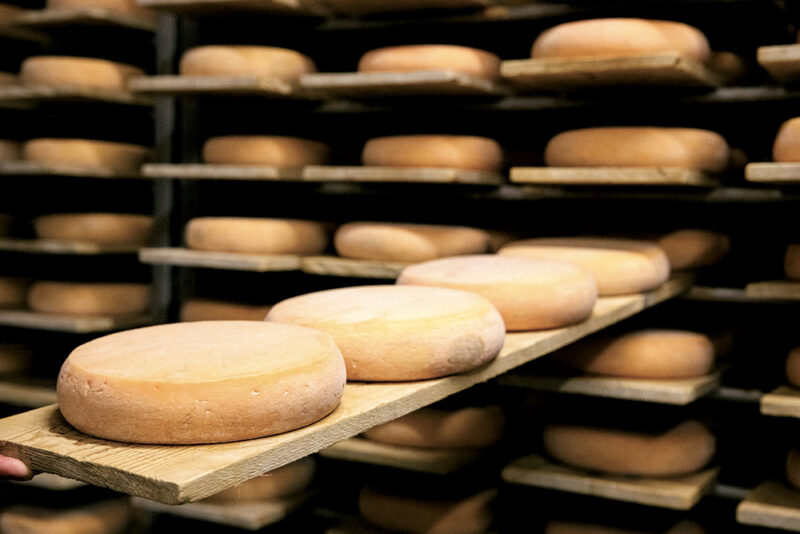
©Ici en Chartreuse, coopérative laitière
Raclette de Savoie is the staple cheese for raclette in France, but other varieties exist, such as Raclette de Franche-Comté, along with numerous industrial versions that have made raclette more affordable and widely available in supermarkets.
More than a dish
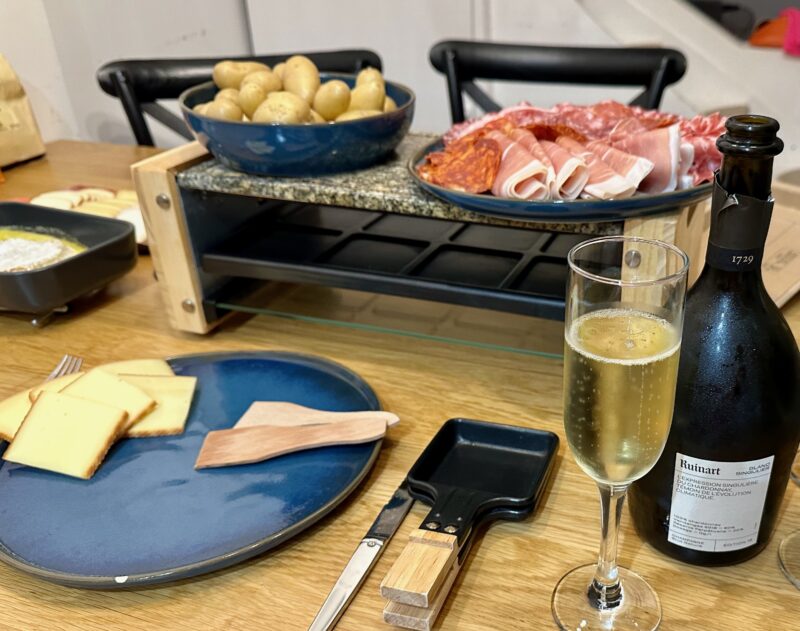
Raclette owes its success to its simplicity, its rich flavor, and, above all, its convivial spirit. It’s such a beloved meal that the colder months are affectionately called raclette season. With its classic spread of hot potatoes, charcuterie, ham, onions, pickles, and, of course, cheese, it’s a dish made to be shared.
I’ve had it on quiet nights in with friends, for birthdays, celebrations, even at Christmas. I’ve lost count of the evenings spent sitting on the floor of a friend’s 30 m² apartment, two or three grills plugged in, fifteen of us crowded around, chatting, laughing, and loading our poêlons — our little raclette pans — with cheese, eating long past sunset.
We’re far from the cattle herds in the Alpine mountains, but the essence endures — warming ourselves on a cold night with some delicious melted cheese.
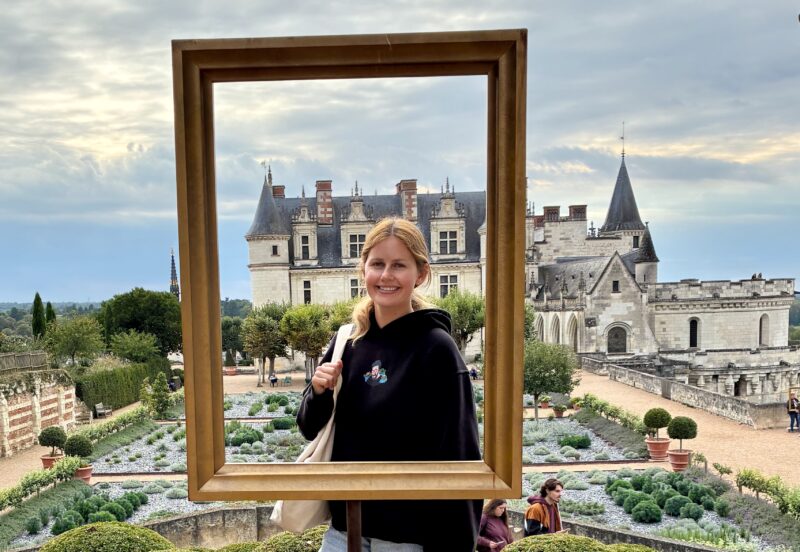 About the writer (photo): Chloé Destremau, pictured here at the Royal Castle of Amboise during one of our autumn Loire Valley Tours is a freelance writer and the daughter of Christy Destremau, founder and owner of France Off the Beaten Path Tours.
Ready for your journey to discover the enchanting world of France?
- Check out 2026 tour dates
- Plan ahead, check out our 2027 tour dates
- Contact us at christy@traveloffthebeatenpath.com to request space availability and/or ask questions.
- Message us on WhatsApp at +1.717.683.2827