

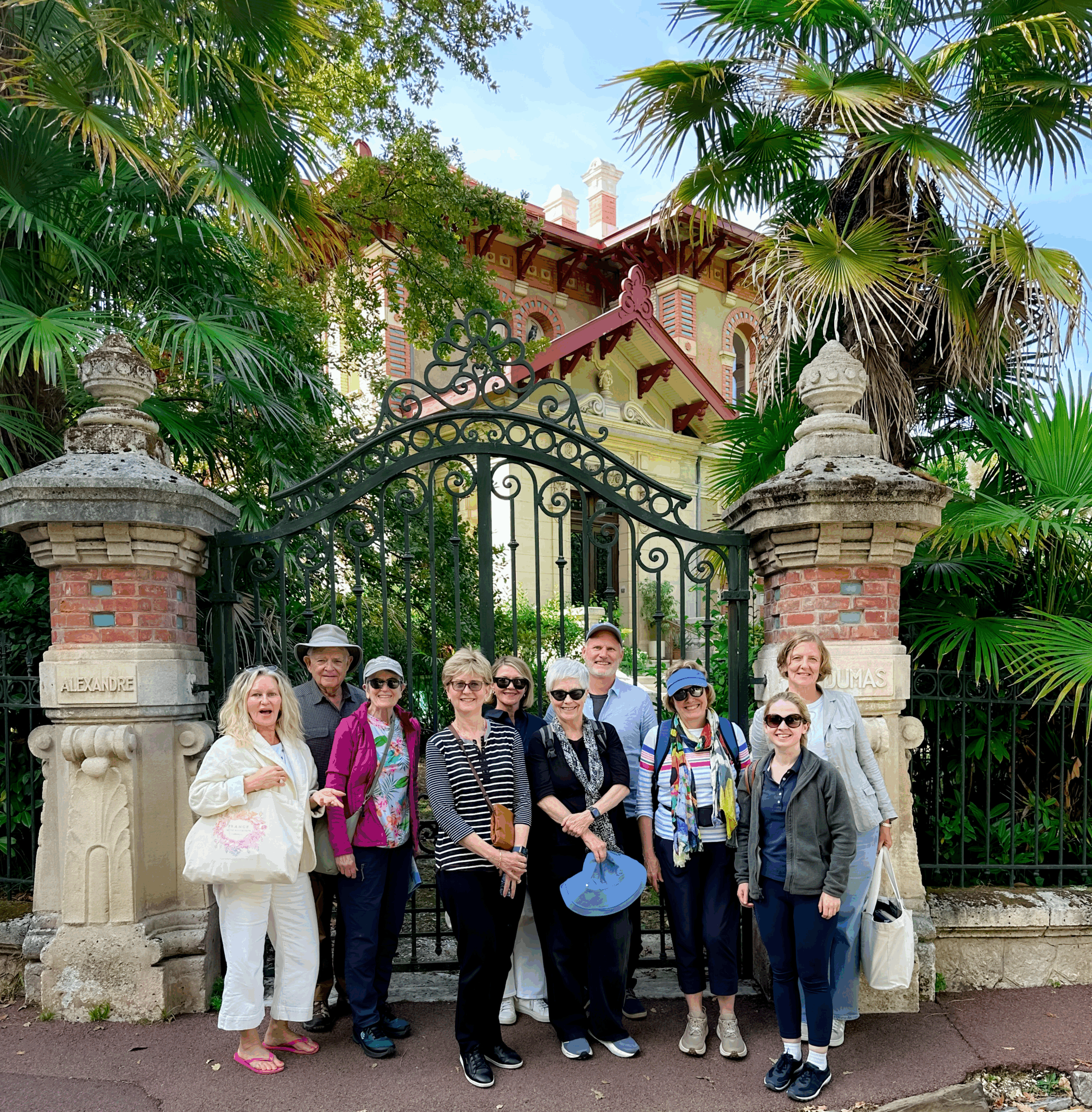
Arcachon’s Winter Town (La Ville d’Hiver)
by Chloe Destremau
Arcachon’s Winter Town
This past winter, I headed south for the quiet, coastal town of Arcachon to see my mother for the holidays. One afternoon, after a hearty meal that one only indulges for the sake of holiday festivities —« c’est les fêtes! » we justify to ourselves, shoving yet another spoonful of ice cream straight from the pint—we headed out with Nova and Koa, our Shetland Sheepdogs, for a digestive walk.
It was one of the clearer days, with the sun brightly shining down the street and only the cold breeze to remind us it was winter. As we walked past the Place de Verdun towards downtown Arcachon, we watched the train station unload another wave of tourists pulling their suitcases. I found myself mentioning the traffic on my way to my mom’s house, recalling the long delay on the beltway from Bordeaux that had added an hour to my already five-hour drive from Brittany. The thought crossed my mind that perhaps I should’ve taken the train—a solution, maybe, to my chronic annoyance with Bordeaux, which I lovingly call “traffic-jam city.” Still, I knew I wouldn’t—not with my dog, not when my car feels so much more convenient and comfortable.
We left the tourists behind and continued toward the Mauresque Park, where we stopped occasionally to look at the various planted trees and the elaborately detailed models of the old Casino and Pereire Chalet. The park was pretty, and we could’ve turned back, but the sun invited us to continue. Ahead lay an iconic part of town.
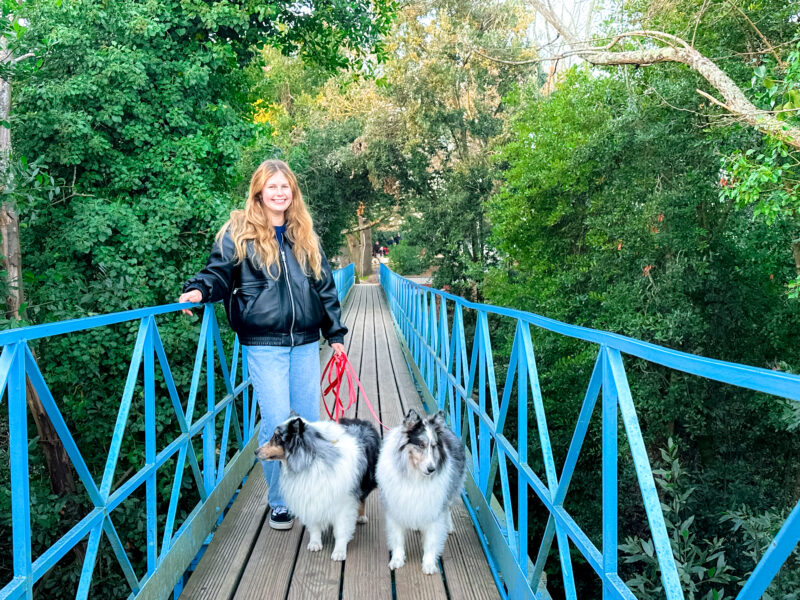
Photo above: Chloé crossing the Passerelle Saint-Paul in Ville d’Hiver with the family fur babies, Nova & Koa, during an afternoon stroll in her mom’s home town of Arcachon, France.
So we continued. We walked out through one of the gates, crossed the Passerelle Saint-Paul, passed the Sainte-Cécile Observatory, and into the meandering streets of the Ville d’Hiver (winter town)—the nineteenth-century neighborhood of villas famously built for tuberculosis patients. The first villa we came across was Villa Alexandre Dumas, originally named Osiris. I read the panel on the fence, which noted the Hispanic-style architecture of the home with Italian influences, pointing out its characteristic polychrome façade of red bricks, some glazed in blue, yellow, and green. It was a beautiful home, standing in the middle of a green parcel, and I envied whoever was privileged to live there.
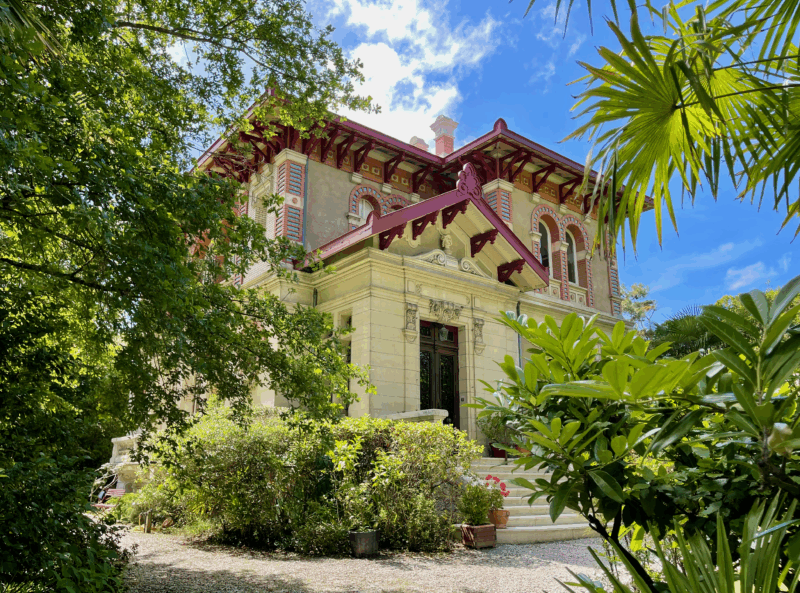
Photo above: Villa Alexandre Dumas
We continued and noticed Villa Bacon, a massive beige block hidden behind a stand of trees. We passed Mozart, Plaisance, Athena, Brémontier, Faust, Marguerite, and many, many more. All had bright, colorful shutters, differently styled roofs and pediments, porches on pillars, gabled roofs with overhanging trusses, and various materials like pine, oak, stone, tile, and brick! Each was candy for the eyes, a pleasant image meshing well with the cultivated gardens, trimmed firs, and ornamental bushes.
There was no breeze in the neighborhood, just the smooth, scented pine air cleansed by the sea. Before we realized it, we had walked the entire Ville d’Hiver twice over, and the sun had dipped into the horizon, splashing the sky with a crimson stroke. As we walked back up the street, passing by Villa Bacon and Alexandre Dumas once again, I wondered how this parcel of eclectic homes had come to be. Why here, in Arcachon, and not anywhere else? Why this style? What was the exigence? Who had initiated the project?
My two-week holiday stay quickly turned into a deep dive into the Ville d’Hiver—its origins, its evolution, its story—accompanied, of course, by a pint or two of ice cream to fuel my readings.
Before Arcachon
Arcachon was born in 1857, when Napoleon III signed an imperial decree declaring it an autonomous municipality. That’s the official date, the official record of « Arcachon » becoming Arcachon. But its story began before that, when it had no name of its own but for a beach of the town of La Teste-de-Buch.
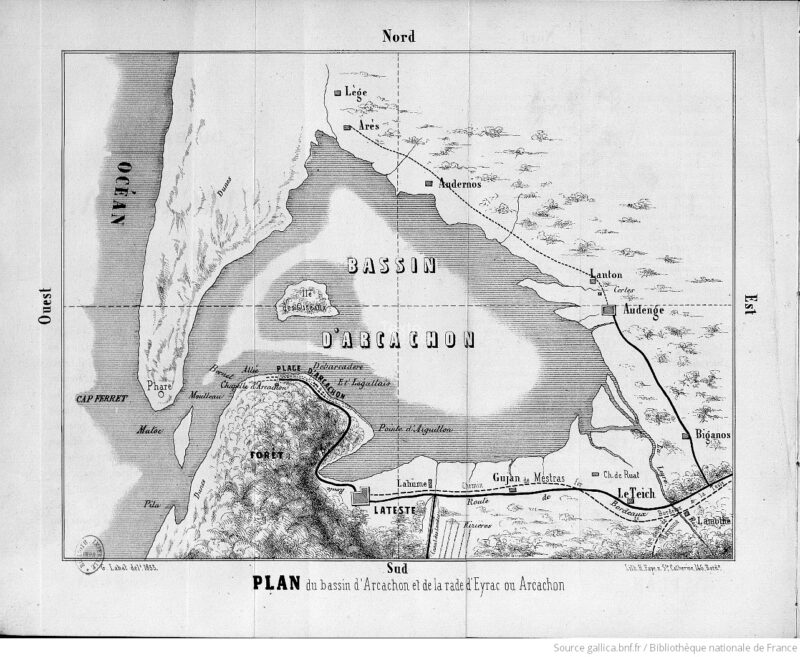
Photo above: Map of the Arcachon basin, Doctor Pereyra’s Journal, 1853
La Teste was nothing more than a small settlement in the Arcachon Basin, some fifty kilometers south of Bordeaux. Its sparse inhabitants were primarily resin gatherers who lived isolated in the pine forest, and fishermen who spent their time at sea. The few women of the town, wives and mothers, were in charge of raising the children who would later step into their fathers’ boots. They also undertook the difficult journey to Bordeaux by horse cart, traveling at night across the Médoc to reach the markets by dawn to sell their goods, before making the trip back home in the afternoon. This was La Teste’s way of life for centuries, resting isolated upon wild lands of dense forest, marshes, and flowing hills of sand dunes.
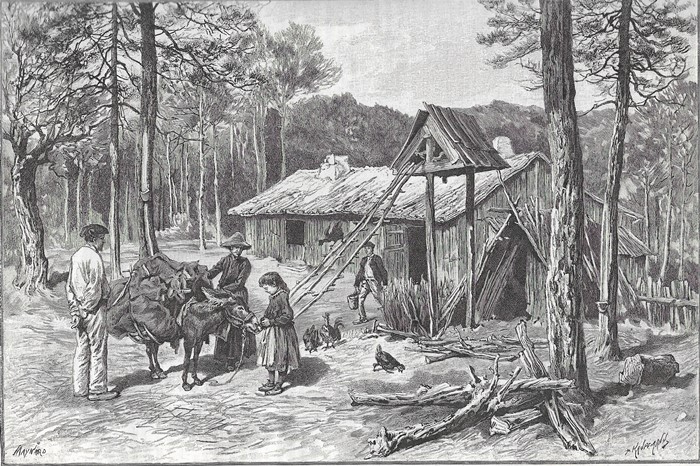
Photo above: « In Arcachon’s forest », M.P Kauffman (1891)
Few outsiders ever set foot in La Teste; it was a journey not all were willing—or capable—to take, given the difficult terrain, poorly kept roads, and absence of infrastructure. Despite the few tourists, a sea captain, after marrying a local Testerine, established a small hotel named Bel Air on the basin’s coast in 1823 for a select, wealthy clientele. Ocean bathing was emerging as a new societal trend, sought by the aristocrats and the newly affluent bourgeoisie. At the same time, the medical field was beginning to recognize the therapeutic benefits of alpine and forest air, seaside environments, and sea bathing. These two movements acted as seeds, planted for what the basin would later become: a prized destination for its ideal environment.
But, despite the ambitious endeavors from LeGallais, La Teste’s development only truly picked up with the arrival of the railroad. Completed in 1842, the railroad shortened travel to just an hour (phew!). The train was, undeniably, much more convenient and comfortable than a horse cart.
While initially intended for the transport of forestry and agricultural goods, the railroad soon enabled city folk to escape the city’s polluted urban air.
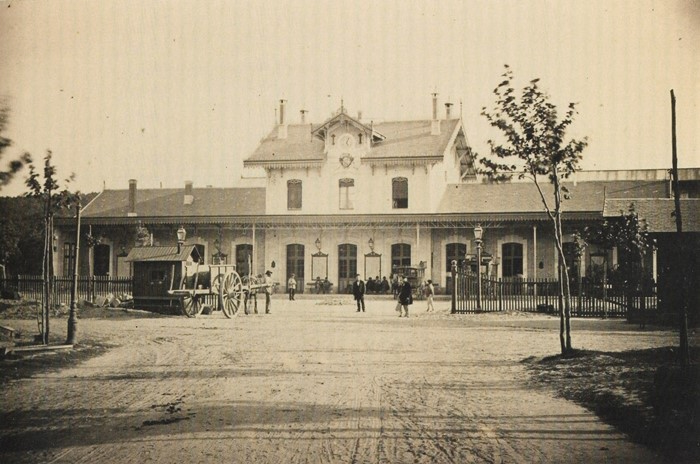
Photo above: Arcachon train station, photographed by Alphonse Terpereau, 1870
During the summer, crowded trains brought tourists to La Teste for the refreshing waters of the basin and the purifying air of the pine forests. Tourists would stay at Francois LeGallais’ hotel or rent cabins from the woodworkers. Some went so far as to build homes along the shoreline to rent out to visitors. Despite steady economic growth from this new door opening—the Ville d’été, or summer town—, the railroad proved costly and unprofitable: fares were high, and few travelled outside the summer months. The railroad eventually fell into the state’s hands, and La Teste, despite developing a summer resort town, reached its economic carrying capacity.
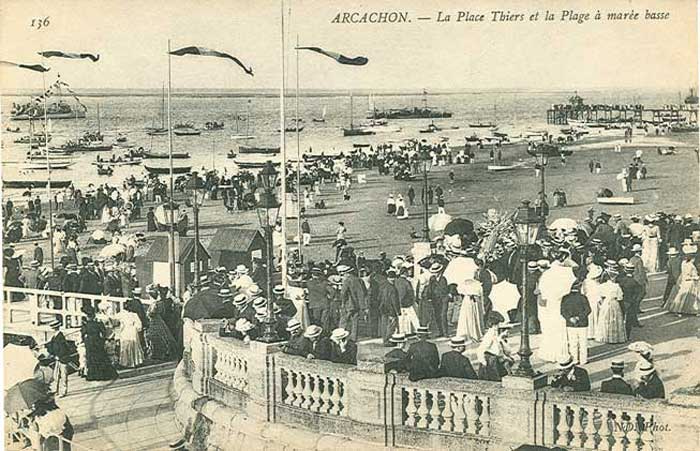
Photo above: Arcachon beach, 1900s
The Pereire Brothers
A decade later, Emile and Isaac Pereire—ambitious financiers, founders of banks, shipping companies, and investors in major railroads—acquired the line from the state through their business, La Compagnie du Midi. As fervent followers of the Saint-Simonian doctrine, which stipulated that science and industrial progress must improve living conditions, the Pereire brothers sought to bring these principles to life. They figured a winter seaside health resort would serve this purpose, all while turning the struggling infrastructure into a profitable enterprise.
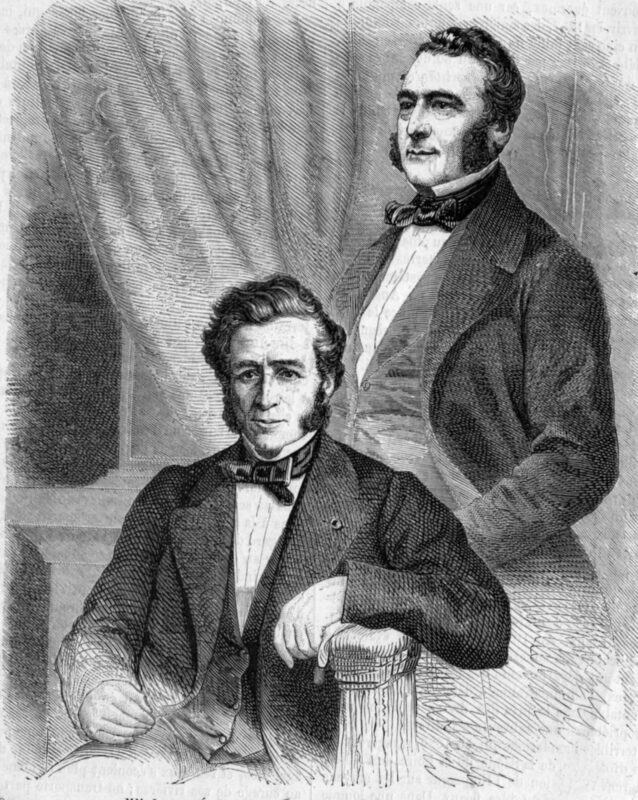
Photo above: Émile Pereire (1800-1875) and Isaac Pereire (1806-1880), © Tallandier, Bridgeman Images
But why build a health resort for the winter season? Why not a regular tourist resort? To understand, we need to step back and look at France’s broader societal and historical context. At the time, as the Industrial Revolution was in full swing and cities were developed, the living conditions remained degraded, and disease spread. One in particular was ravaging France : tuberculosis. Called phthisis at the time, tuberculosis had yet to be truly understood, but it had been identified, and cases were rising exponentially. Physicians began to seek various cures, among which the seaside air was deemed purifying and invigorating for weakened chests and provided an ideal environment for healing.
The Medical Exigence
The Pereire brothers were advised by a close associate, Doctor Pereyra of the Bordeaux Saint-André hospital, a researcher on the health benefits of seaside air and sea bathing. Pereyra had written extensively on the therapeutic virtues of seaside climates for patients suffering from respiratory and cardiac diseases, particularly tuberculosis. Even before the Ville d’Hiver was built, Doctor Pereyra was sending several patients to the beach of Arcachon in La Teste for months at a time and had recorded remarkable improvements.
In his journals, he noted the area’s unique qualities: the beach, ideally oriented westward, was sheltered from violent winds while remaining open to the purifying scents of the surrounding pine forests. The air—saline and cleansed—strengthened weakened chests and restored breath. Patients could stay active, as the basin’s waters, protected from the ocean’s harsh turbulence, allowed for sea bathing, swimming (in autumn and spring), and other forms of gentle exercise, such as rowing and sailing. In winter, the shoreline water averaged above freezing temperatures, making the climate ideal for daily walks along the beach. Patients could also stroll through the pine forest, seeking its shelter when winds grew too strong, while the most robust could go horseback riding. Pereyra, convinced of the sea’s benefits, would even prescribe a glass of seawater to treat certain ailments. His patients improved greatly, and some were even rid of the illness at the end of their stay.
Additionally, for chronically ill patients whose conditions might otherwise require relocation to warmer climates such as Madeira, Naples, Nice, or Hyères—destinations beyond the means of many—La Teste offered an affordable and accessible alternative. Its maritime virtues, mild winter climate, and close proximity to Paris made it particularly attractive.
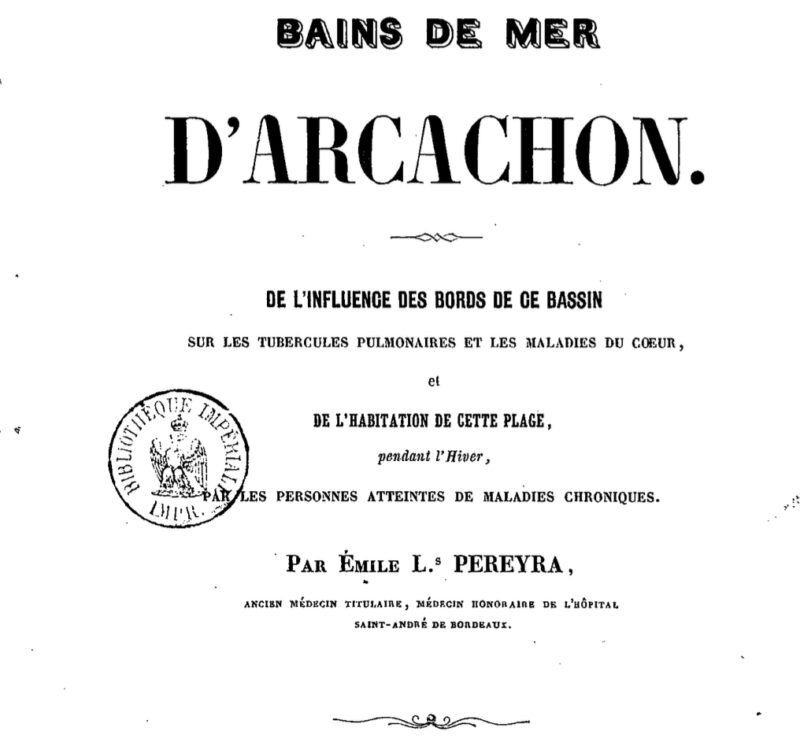
Photo above: Medical Journal, (Sea bathing in Arcachon: the influence of the shores of this basin on pulmonary tubercles and heart disease, and the winter residence of people with chronic illnesses on this beach), Émile L. Pereyra, 1852. © Gallica Archives
With Pereyra’s reports, the Pereire’s beliefs and entrepreneurial ambitions, the railroad was extended beyond La Teste in 1857. Arcachon was subsequently officialized, land was acquired at the top of the beach hills, and construction began in 1862. Unlike the seaside resorts sprouting across France—particularly in northern and southern towns—which were one big establishment that housed patients, the Pereire brothers built a cluster of « home sanatoriums. » They would function as rental properties managed by the Compagnie du Midi and as private residences within the Pereire estate. The project was entrusted first to Gustave Alaux—who built the first villas—and then to Paul Régnauld, an engineer and architect closely associated with the Pereire family.
The Ville d’Hiver was on its way.
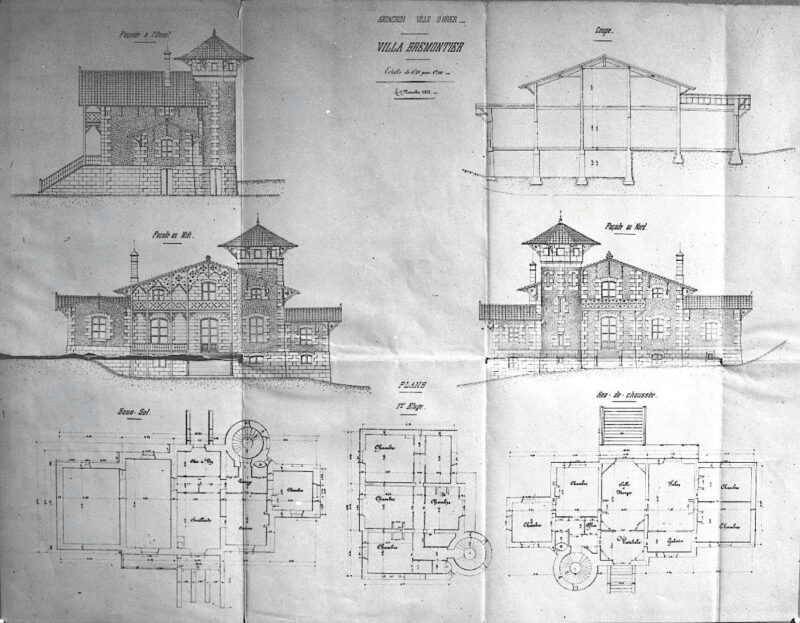
Photo above: Architectural plan of Villa Brémontier
The Ville d’Hiver
The Ville d’Hiver was built relatively quickly—in about three years, between 1862 and 1865. It was planned to rest on the hills of the southern slopes of the dunes to benefit from the sun and avoid humidity. The first ensemble of villas was built in an eclectic style, blending the early seaside house style with Swiss chalet architecture in a way that created harmony with the forested landscape. Alpine elements—such as thatched roofs, wooden railings, pediments, and half-timbering—interacted with the surrounding dunes and pine forest, evoking the impression of mountains and fir trees.
The villas—or chalets—were each designed individually with varying styles of finials, lambrequins, dentils, and balusters. Most were constructed with steep roofs, while some sloped (e.g., Villa Montretout) or were flat (e.g., Villa Napoléon). A balcony was built at the level where the sick were to reside. Some had verandas or rested on belvederes, all intended for the patient to walk outside and take in the view and breathe the fresh air. Some villas stand out, rejecting the picturesque architecture, such as Franklin with its Haussmannian white walls, gray slated roof, and symmetrical layout, or the massive Villa Bacon, whose architecture is closely related to urban neo-gothic, clashing with the picturesque environment.
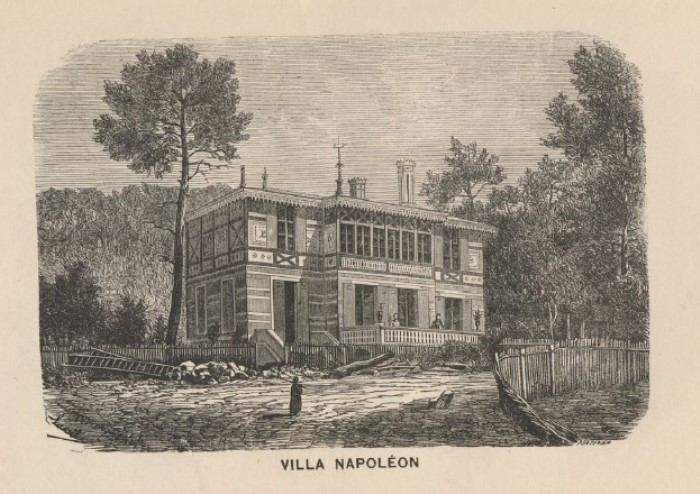
Photo above: Villa Napoléon, 1866
This diversity created a visually rich environment while allowing for a certain degree of standardization in construction. The interiors followed recurring plan types, facilitating rapid building while preserving the illusion of individuality. The layout was primarily planned for their medical function : large openings, cross-ventilation, terraces, and galleries encouraged outdoor life and exposure to fresh air. The interior designs were relatively sober, prioritizing hygiene, light, and ease of maintenance over eccentric styles. Each villa intended for rent was fully furnished and catered to bourgeois tastes, with its neo-Renaissance style, where, for some, a luxurious touch was provided by porcelain, crystal, and mirrors. There was a Villa for every family size, taste, and style.
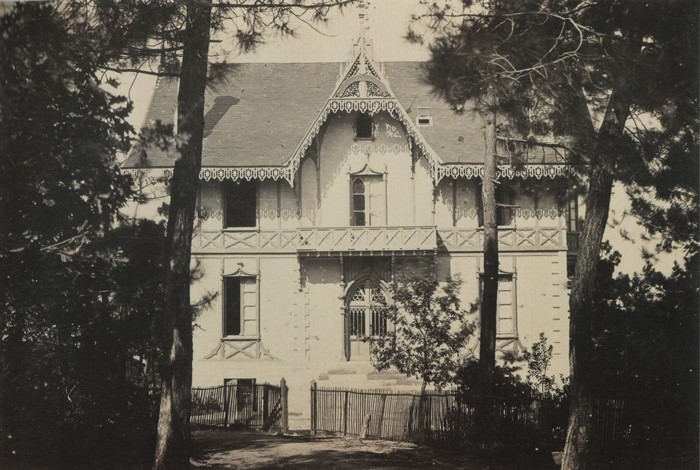
Photo above: Villa Montretout, photographed by Alphonse Terpereau, 1870
Rates differed between winter and summer, and varied according to the size of the cottage, which was assessed based on the number of master bedrooms. For example, Brémontier, the largest chalet with nine master bedrooms, was rented for 450 francs per month.
During the same season, Graciosa (now called Trocadéro), which had only four bedrooms, was rented for two hundred francs. Which, according to the INSEE conversion simulator, equals about 2,000 euros per month for a chalet at 450 francs and 900 euros for a chalet at 200 francs, respectively.
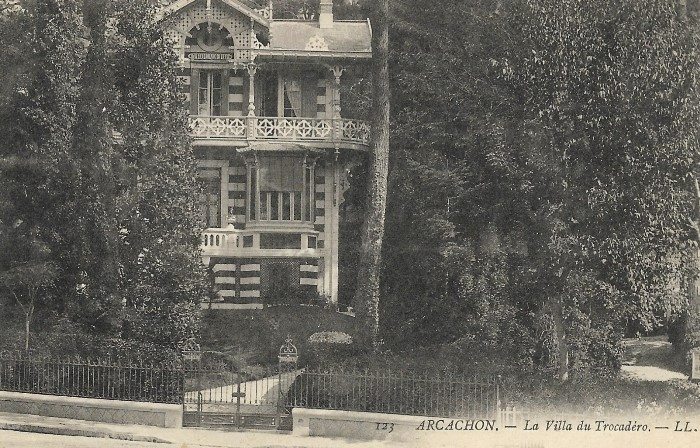
Photo above: Villa Graciosa, now Trocadéro, 1900s
In 1863, as the Ville d’Hiver was still under construction, Arcachon welcomed eleven thousand visitors, ten thousand of them were French from northern and southern France and Bordeaux, and about a thousand foreigners from England, Spain, Germany, Italy, America, and other countries. One year later, the railroad had recorded over 200,000 visitors.
Arcachon was growing exponentially.
Developers quickly followed the Pereire brothers, building neighborhoods and residences, as well as recreational establishments such as a gymnasium, a casino, and a theater, along with the Sainte-Cécile observatory, the Passerelle Saint-Paul, gardens, and the Mauresque park, properly laid-out roads, plazas, hotels, schools, and much more.
And After
Arcachon continued to prosper as a tourist destination and a safe haven for the sick in the following century. Today, Arcachon retains its touristic appeal with its soft beaches and gentle sea, though it has since lost its medical stature. Most of the villas have changed over the past two hundred years. Some have undergone total or partial transformations or repairs, losing their original architecture, like Villa Faust, Napoléon, Bacon, and Shakespeare. Others have even been completely destroyed and replaced by other buildings, such as hotels or other villas; this was the case for Isabelle, Solitaire, Robinson, and Halévy. Some remain relatively unchanged since they were built, such as Villa Noémi, Montretout, Moulin Rouge, and Brémontier.
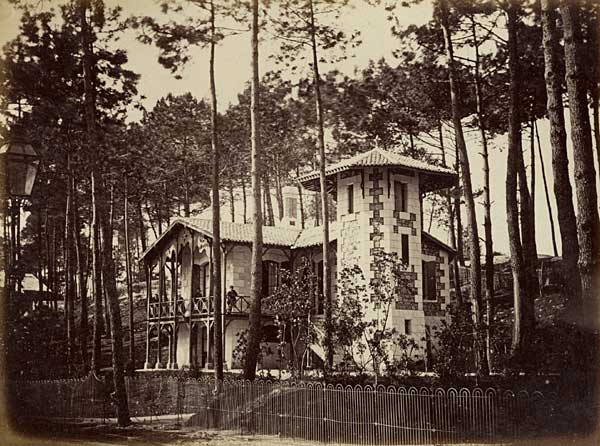
Photo above: Villa Faust, Photographed by Alphonse Terpereau
The Ville d’Hiver, and thus all of its villas, is today listed and classified as a protected heritage site of France. Some can still be rented or bought, though strict regulations make it difficult to renovate them without compromising each villa’s integrity.
It’s taken me innumerable pints of ice cream to write this piece, as the research was intensive—I grew fascinated by the harsh life of the Testerine, the rapid development of this quaint little town, the war tuberculosis had declared on France, and the exponential growth of picturesque villas as a line of defence. My frustration with the Bordeaux beltway traffic seems trivial compared to the women traveling at night by horse-drawn carriage. There’s still much more to say, but I am in desperate need to take a walk outside and breathe in the fresh, salty, pine-scented air.
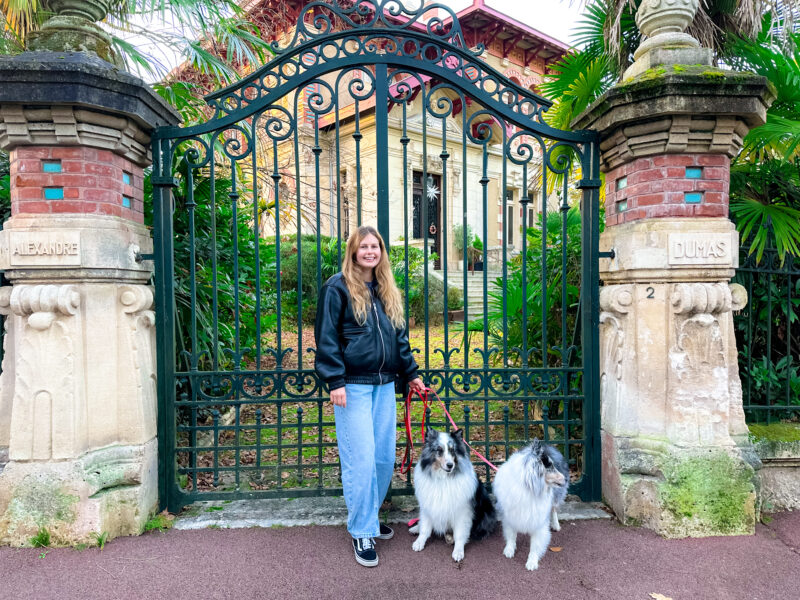 About the writer (photo): Chloé Destremau, pictured with the family fur babies, Nova and Koa, at the Villa Alexandre Dumas in the Ville d’Hiver in Arcachon, is a freelance writer and the daughter of Christy Destremau, founder and owner of France Off the Beaten Path Tours.
Ready for your journey to discover the enchanting world of France?
- Check out remaining 2026 tour dates
- Plan ahead, check out our 2027 tour dates
- Contact us at christy@traveloffthebeatenpath.com to request space availability and/or ask questions.
- Message us on WhatsApp at +1.717.683.2827